Sound Medicine Public Welfare Empowerment Forum and Business Sustainability Symposium
(Kuala Lumpur, Malaysia) In the history of Chinese medicine, Li Shizhen’s Compendium of Materia Medica systematically catalogued the medicinal properties of natural substances, laying the foundation for centuries of traditional Chinese medical practice. In today’s era of rapidly advancing artificial intelligence (AGI) and digital civilisation, a new exploration centred on “sound” and “human health sovereignty” is quietly unfolding.
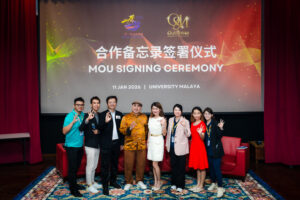
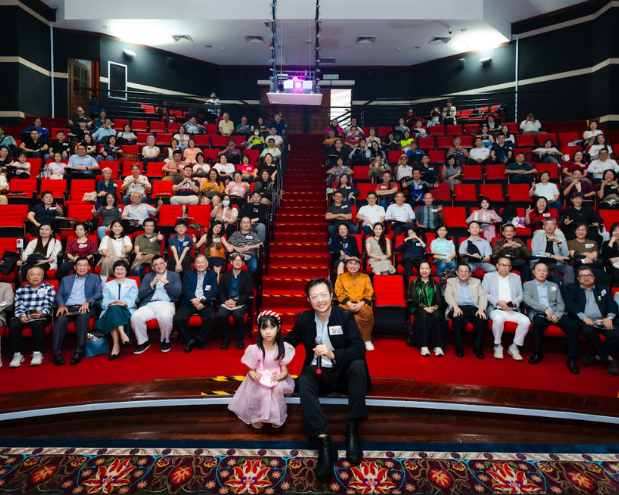
Recently, the ShenZhenTianXia initiative, in collaboration with the One Belt One Road Certified Institute (OBORCI) and the National Digital Technology R&D Certified Council, hosted the Sound Medicine Public Welfare Empowerment Forum and Business Sustainability Symposium at the Asia-Europe Institute, University of Malaya. The event formally introduced the Compendium of Sound Medicine, a comprehensive framework integrating medicine, technology, and civilisation. Nearly 300 participants from education, healthcare, technology, business, and the non-profit sector attended, witnessing a significant milestone in the internationalisation and institutionalisation of sound health management.
The forum highlighted that sound, as one of humanity’s oldest yet under-systematised life modalities, has long been recognised in traditional medical texts such as the Huangdi Neijing as a vital regulator of meridians, vital energy, and emotional well-being. In today’s society, where stress imbalance, emotional suppression, and chronic health issues are widespread, sound medicine offers a gentle, sustainable, and self-aware approach to health management.
Master Yang Zhi Yong, founder of Sound Beauty and an expert in vocal training and sound therapy, presented the core principles of the Compendium of Sound Medicine. He emphasised that sound is not a substitute for medical treatment but a means to awaken the often-overlooked “internal regulatory capacities” within modern health systems, guiding individuals from passive treatment to active self-regulation.
Unlike traditional experience-based therapies, the Compendium of Sound Medicine anticipates future integration with AGI and digital technologies. By analysing sound frequencies, rhythms, resonance, and emotional characteristics, it aims to support scientifically informed, systematised, and personalised sound health management, promoting wider accessibility and replicable applications for public health.
The forum also revealed plans to establish a Sound Medicine Industry R&D Foundation, which will build a transparent and sustainable digital ecosystem spanning curriculum development, technology application, digital identity, health data verification, and industry collaboration. Leveraging blockchain and digital governance concepts, this initiative will explore global cooperation and equitable value sharing within the sound health sector.
As a co-organiser, One Belt One Road Certified Institute (OBORCI) continues to advance emerging interdisciplinary fields towards standardisation and international alignment. Dr. Kevin Ng, OBORCI President and Forum Chair, highlighted that the development of sound health must be grounded in academic accreditation, structured curricula, and international standards to ensure long-term sustainability. Related courses have already received certification from international universities, allowing participants to obtain globally recognised credentials and pursue professional pathways. Dr. Liu Yonghe, Chair of the National Digital Technology R&D Certified Council, underscored that the future of sound therapy lies in its scientific, institutionalised, and verifiable application rather than reliance on individual experience.
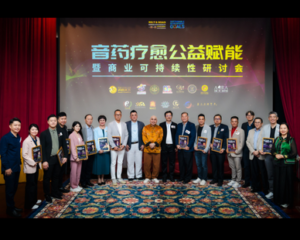
The event was jointly organised by ShenZhenTianXia, One Belt One Road Certified Institute, National Digital Technology R&D Certified Council, CSR Brand Angel, International Business Alliance, Esiget Academy, and OutShine Mastery Resources, with support from multiple chambers of commerce, ESG organisations, and research institutions. During the forum, several memoranda of understanding were for mally signed, laying the groundwork for collaborative courses, industry partnerships, and international networks that will extend from Malaysia to ASEAN and eventually to the global stage.
Looking ahead, OBORCI will continue to prioritise international accreditation and industry-academia-research collaboration platforms, actively promoting the United Nations’ Sustainable Development Goals (SDGs) and ESG principles. The institute aims to deepen campus–enterprise partnerships, linking academic research, industry applications, and social welfare, to translate innovative outcomes from academia into industrial and global impact. By leveraging Malaysia as a starting point and connecting the Belt and Road and global networks, OBORCI seeks to establish stronger international influence and practical standards in health technology and digital civilisation.